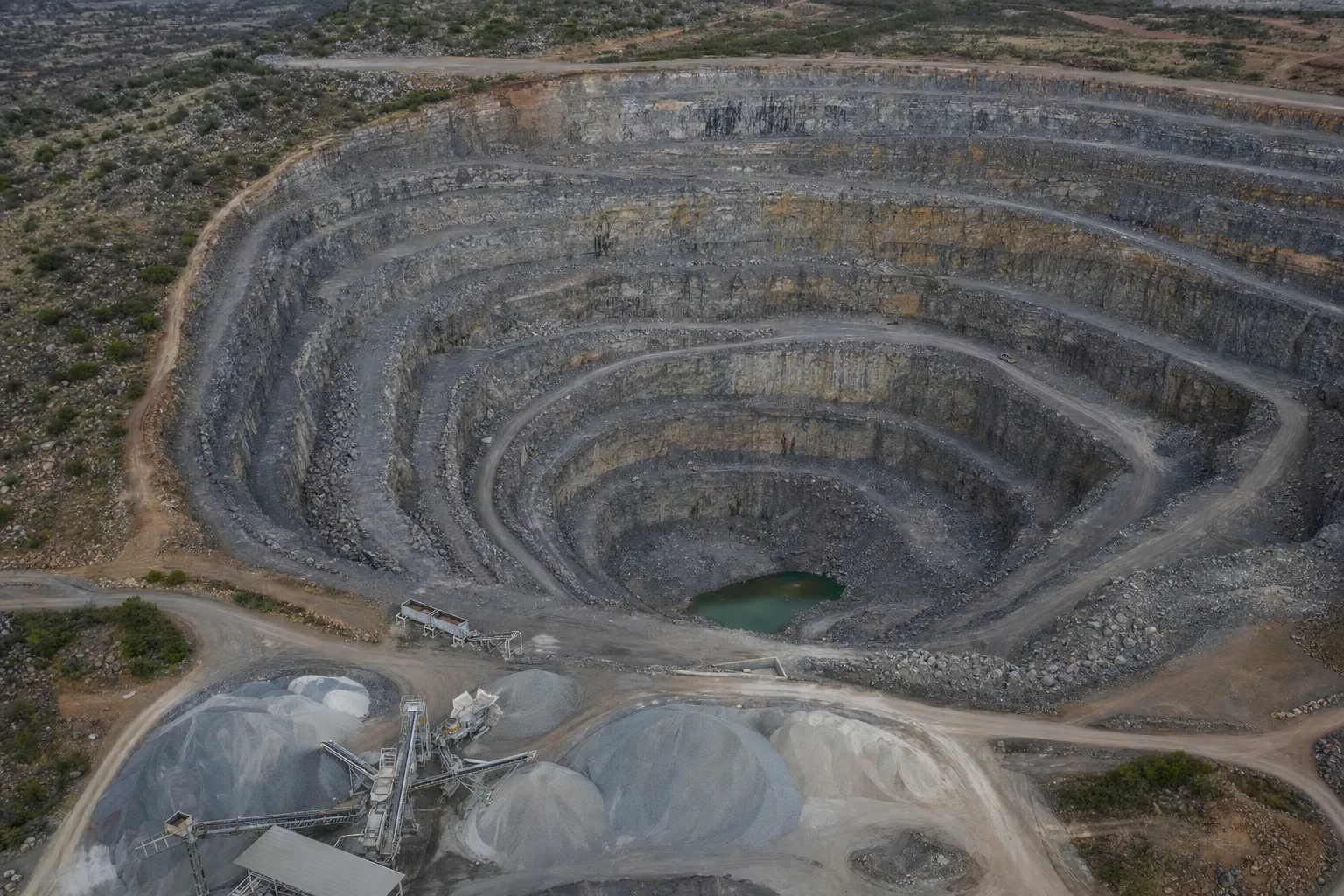
Quarry survey requests often read the same every month: survey the pit and the stockpiles. On opencast mining surveys, that brief produces figures, but not always figures that production can use to decide anything.
Quick Answer
Start the brief from the decision the survey must support, such as the next extraction sequence, a blast volume or a stockpile handover. Each decision needs a different extent, timing and format. State the survey date and extent with every figure, because a figure is tied to the ground as it was on that day. Keep extent and control the same between surveys, so the figures can be compared.
What the planning team needs in the handover is covered in our article on the opencast survey handover. This article is about the brief that comes before it.
Start the quarry survey brief from the decision
A survey brief that names the decision first tells the surveyor what to capture, when, and in what form, instead of leaving them to guess.
Ask production one question: what will you decide with these figures? The answers are usually few and specific. Where to extract next. How much rock a planned blast will move. How much material is on the stockpiles for a sale or a handover. Whether the pit is advancing to plan. Each one needs something different from the survey.
| Decision | What the brief should specify |
|---|---|
| Extraction sequence | Face positions across the active area, on the planning reference |
| Blast volume | The blast area, captured before the blast, against the design floor |
| Stockpile handover | Each pile by name, its base surface and the handover date |
| Progress against plan | The same extent and control as the previous survey |
Timing follows the decision
A blast volume needs the survey just before the blast. A stockpile handover needs it on the handover date. A monthly progress check needs it at the same point each month. A brief that names the decision lets the surveyor schedule to it. One that says only "monthly" may deliver the figure a week after the decision was made.
Name who reads the figures
Say who will use each figure and in what form. A pit planner may want a surface to load into planning software. A production manager may want one table of volumes by area. A sales or finance team may want stockpile quantities on a fixed date for a month-end statement. One quarry survey can serve all three, but only if the brief says so. Without it, the surveyor delivers one format and the other two teams rework it themselves, or do not use it at all.
Say what may be left out
Some areas cannot be reached safely on the day, such as an active blast zone or ground near a working face. Ask the surveyor to record any area that was not captured and why. A gap that is marked can be planned around. A gap that is silently filled by the software can lead production to decide on ground that was never measured.
Key point
Write the decision into the brief. The extent, timing and format follow from it.
Monthly figures nobody uses?
Send us your current brief. We will rewrite it around your production decisions.
Ask us to review the briefKeep figures comparable and current
A figure used in a production decision is only safe if its date, extent and control are known, because the ground keeps changing after the survey.
Date and extent travel with every figure
A volume or face-position figure is tied to the date and extent of the survey that produced it. Used without those two facts, it risks being applied to ground that has since changed. State both on the drawing, in the file name and in the report. Re-survey before relying on a figure for a decision made materially later.
Same extent, same control
A comparison between two dated surveys can show a change in the pit, but only if both used the same extent and the same reference control. Otherwise, part of the difference may be a change in what was surveyed, not in what was extracted. The same applies to stockpile surveys: keep the same footprint and base surface between dates.
Choose the capture method to suit
A quarry is open to the sky, so GNSS and repeat aerial survey are generally available. A steep highwall, a shadowed pit floor or an overhang can still need a ground-based method. The bench work itself has to fit around blasting and loading, as covered in our article on the open pit bench survey.
Key point
Keep the extent and control the same between surveys, and state the date on every figure.
Setting up a regular quarry survey?
Tell us your production decisions and reporting cycle. We will price the programme.
Get an opencast survey quoteWhere survey cannot help you
A decision-led brief makes every quarry survey useful to production, but some answers sit outside what survey can give.
A survey measures volume, not mass; tonnes need a density from sampling the material. It cannot keep a figure current once extraction moves on. It cannot decide the extraction sequence or the blast design; it supplies the geometry those decisions use. Where figures feed payment or reconciliation, the volumetric survey basis should be agreed in writing. The SAIMM is a useful reference for mining and quarrying practice in the region.
Survey and production figures that disagree?
An independent check can test each figure against its stated basis.
See survey auditsLet's Build With Accuracy.
Quarry surveys scoped from your production decisions, with the date and extent on every figure.
Request a Quote No obligation — we reply within one business day.