
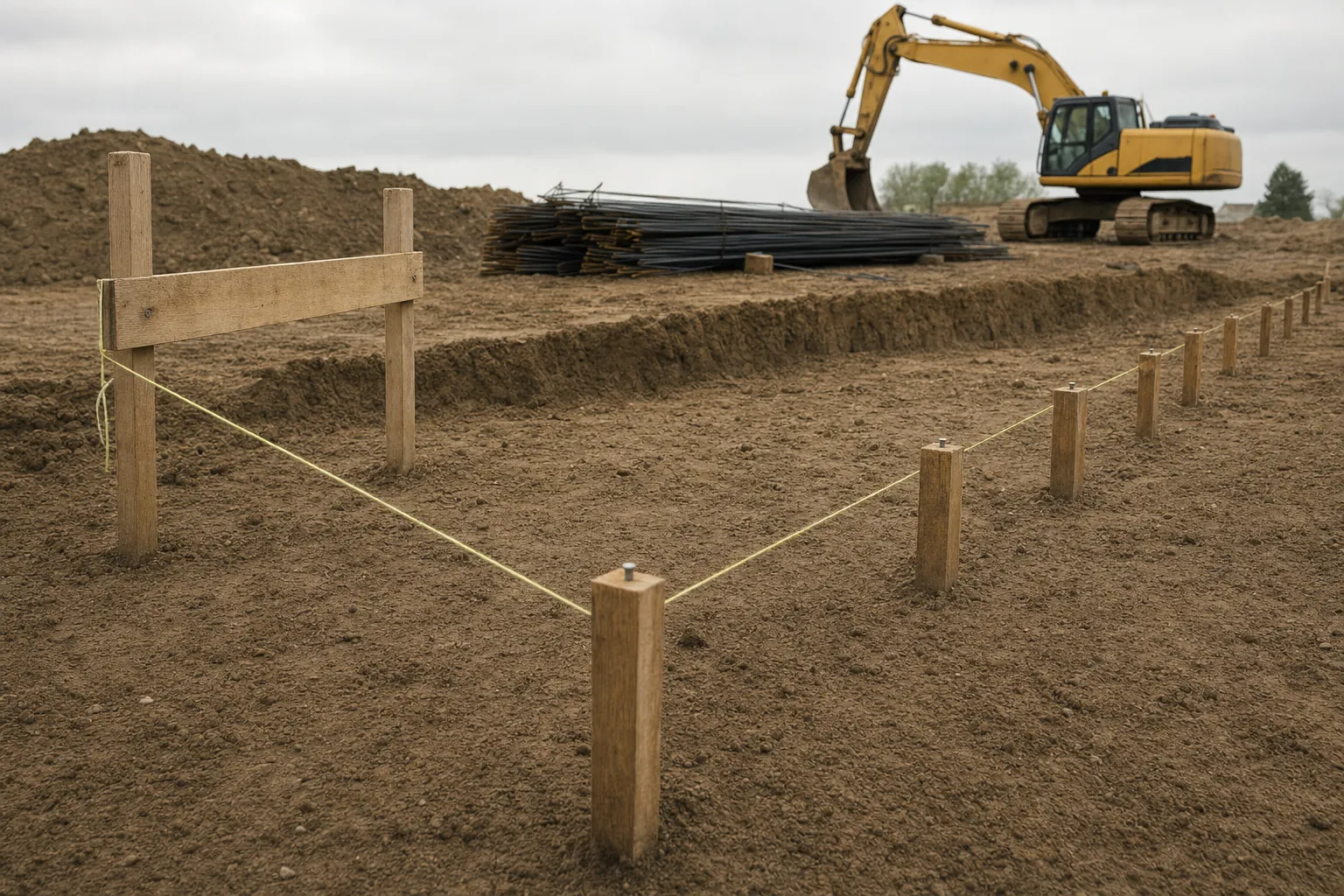
Setting out survey visits are lost on the morning of the work far more often than in the office. The surveyor arrives to set out the design, and something on site that should have been ready is not.
Quick Answer
On the day, the surveyor needs seven things in place: the current drawing revision on site, the agreed grid and coordinate data, control that is exposed and undisturbed, clear lines of sight, a work area that is handed over and safe, a named person who can approve a discrepancy, and agreed marking materials. Confirm each one the day before. Every item missing on the morning is a delay that the survey itself cannot recover.
This article covers the day of work only. The wider decisions that belong in the appointment are set out in our construction survey brief. The list below assumes the brief exists and asks a narrower question: is the site ready today?
Seven things a setting out survey needs on the day
Each item below names the delay it prevents, because that is the clearest way to see what leaving it to the morning actually costs.
1. The current drawing revision, on site
The issued revision the work is to follow, available on site, with the revision number confirmed before the crew arrives.
Prevents: a visit spent confirming which drawing applies, or pegs set from a superseded one.
2. The agreed grid and coordinate data
The coordinate file or setting-out data for today's elements, already supplied to the surveyor, on the agreed grid and height reference.
Prevents: preparing data on site while the crew waits.
3. Control that is exposed and undisturbed
The reference points the work will be set out from, uncovered, accessible and not knocked since they were last checked.
Prevents: a visit that ends in re-establishing control instead of setting out.
4. Clear lines of sight
Stockpiles, parked plant, formwork and materials moved off the lines between the control and the work area.
Prevents: time lost working around obstructions, or positions that cannot be reached from the control at all.
5. A work area that is handed over and safe
The area excavated or prepared to the stage the setting out is for, with any site induction and permit arranged in advance.
Prevents: the crew standing down because the area is not ready or not yet safe to enter.
6. A named person who can approve a discrepancy
One person, on site or reachable, with the authority to decide when the drawing and the ground disagree, without stopping the work.
Prevents: a pour held, or work continuing on an assumption, while a decision is chased.
7. Agreed marking materials
The pegs, paint, nails or offset boards agreed for the job, and who supplies them.
Prevents: marks improvised on the day that do not survive the next machine movement.
Key point
Most of the seven are decisions or tasks for the site, not the surveyor. A setting out survey runs on time when the site confirms readiness the day before, not when the crew discovers the gaps on arrival.
Why a stalled visit costs more than the survey
A setting out survey that cannot start costs the project more than the visit fee, because the work waiting for the marks waits too.
An excavator stands. A pour is moved. An inspection is rebooked. The visit fee is usually the smallest cost in that chain, which is why readiness tends to be treated as an administrative detail until the day it stops the programme. A day-before check takes a few minutes and is the cheapest way to avoid it.
Planning setting out on a live site?
Send us the programme. We will give you a readiness list for each visit.
Ask for a readiness listWho confirms readiness
The site agent or contractor is usually best placed to confirm readiness, because most of the items are under their control.
A short call the day before, running through the seven items, is enough on most projects. On civil construction and engineering projects with several crews or stages, a written readiness check per visit works better, because it records what was confirmed and by whom. The South African Institution of Civil Engineering publishes widely on construction practice, and planning ahead of site activity is a recurring theme.
Key point
One person should confirm readiness, against one list, the day before. Shared responsibility on the morning usually means nobody checked.
Need setting out on a fixed programme?
Tell us the stages. We will schedule attendance around your pours and inspections.
Get a setting-out quoteWhere survey cannot help you
A ready site lets a setting out survey run on time, but some problems sit outside what the survey can solve on the day.
Survey cannot set out from a drawing that has not been issued. It cannot work from control that was destroyed and never recorded. It cannot reach an area that is unsafe or blocked. And it cannot decide, for the project, what to do when the ground and the design disagree.
What it can do is set out from a defined reference, record what was marked, and say plainly what could not be done and why. That record is part of the evidence covered in our survey handover checklist, and it is worth asking for after every setting out survey visit. Recording the work as it is built is a separate task, covered by an as-built survey, and it belongs in the programme from the start.
Writing the wider brief first?
The wider brief settles the decisions that make every visit easier.
Read the construction survey briefLet's Build With Accuracy.
Setting out scheduled against your programme, with readiness confirmed before the crew arrives.
Request a Quote No obligation — we reply within one business day.