Underground survey work fails in different places from surface work, and a brief written for the surface does not see those places coming. The survey that directs underground development runs to the mine's cycle, not the surveyor's diary, and the brief has to say how the two fit together.
Quick Answer
A brief for a new decline or development end needs everything a surface brief has, plus six things a surface brief never has to say: when the crew can reach the face, what services and ventilation are in the way, who holds and protects the control, what reference the design is set on, what is handed back after each advance, and who is told when a station is disturbed. Leave any of them open and it gets settled underground, by whoever is on shift.
This article covers only what the underground setting adds. The common items, such as the drawing revision and who approves a discrepancy, are set out in our construction survey brief, and they apply underground unchanged.
Six items an underground survey brief adds
Each item below is something the mine or the contractor decides, which is why it belongs in the brief rather than in the surveyor's method statement.
1. Access windows, booked rather than assumed
State when the crew can be at the face, which shift they work with, and who on that shift they report to. Name the blasting, cleaning and support windows the survey has to fit between, and who confirms the end is clear on the day.
Prevents: a crew travelling to the end to find it under a blasting or cleaning window, and the visit producing nothing.
2. Services, ventilation and clearance
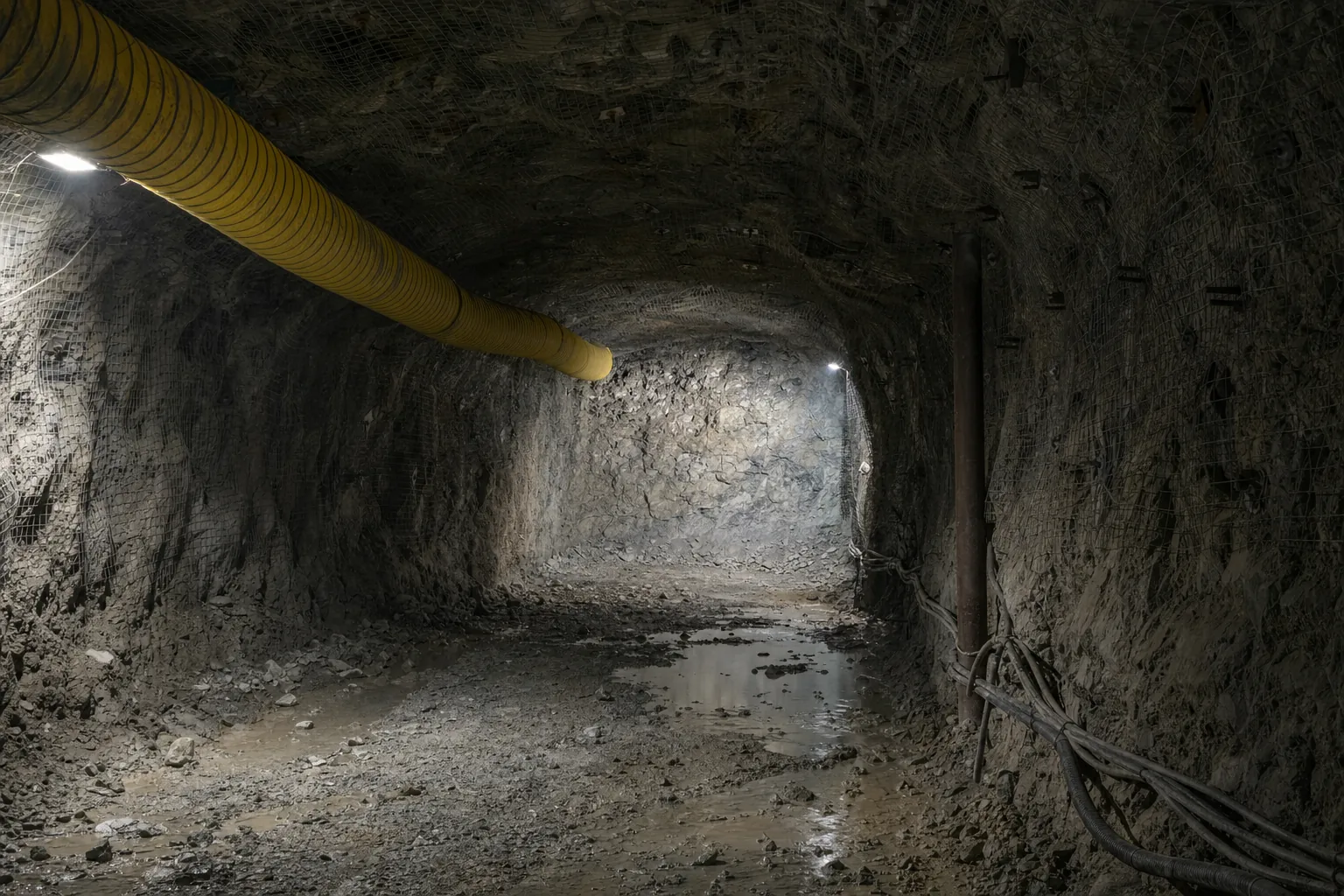
Say what occupies the excavation near the working end: ventilation ducting, pipe columns, cable runs, and equipment parked in the heading. Say who can move or re-hang them, and who has to give permission.
Prevents: a station or a line of sight blocked by something that could have been moved with a day's notice.
3. Who holds the control
Name the stations that are authoritative, who established them, and when they were last checked. Say who may install new stations, and whether a contractor works from the mine's control or carries their own. If an orientation check by gyro is part of the scope, say so here rather than leaving it to be proposed later.
Prevents: two parties working from two sets of control and discovering it at a holing.
4. The reference and the design line
State the mine grid and coordinate system, which plan and design revision the development is to follow, and who issues a change. On a project that also involves shaft sinking and equipping, say how the shaft and the development share one reference.
Prevents: development marked from a superseded design, found only when the plot is compared.
5. What is handed back after each advance
Agree the content and the turnaround. Typically that means the marks the next round is drilled from, a progress plot against the design, and a record that separates the control used, the features observed and the date of each measurement.
Prevents: the next round drilled from the previous round's marks, because the update arrived after the blast.
6. Who is told when a station is disturbed
One named person on the mine side, reachable on every shift, who is told when a station is damaged, moved or cannot be found, and who decides what happens next.
Prevents: work carrying on from a station nobody is sure of.
Key point
None of the six is a survey method question. Each one is a decision about access, ownership or timing that the mine or contractor makes, and a brief that leaves it open moves the decision to the working end.
Why the cycle, not the invoice, sets the cost
An underground survey visit that produces nothing costs more in lost cycle time than it ever costs on the invoice.
Conventional development runs as a repeating sequence of drilling, blasting, cleaning and support. A survey that misses its window does not simply move to later in the day. It either holds the next round or lets it proceed without current marks. Neither shows up as a survey cost, which is why the brief items that prevent it tend to be treated as administration.
Appointing a surveyor for a new decline?
Send us the design and the development schedule. We will tell you what the brief still leaves open underground.
Ask us to review the briefWho should write the underground brief
The mine's survey department is best placed to own the underground survey brief, with the contractor and the development engineer each contributing the parts they control.
The mine settles the reference, the control and who may install stations. The contractor settles the shift contacts, the access windows and the handback turnaround. The surveyor should read the draft before it is issued. It is also worth deciding at this stage whether the work will be verified by a party that did not produce it, because an independent check is far easier to arrange when the brief already names what will be checked and when. A complete brief also makes the quotations you receive comparable. The Institute of Mine Surveyors of Southern Africa, which has served the profession since 1923, is the natural reference point for the professional side of the appointment.
Key point
The underground brief is shared work. The mine owns the reference and the control, the contractor owns access and timing, and the brief is where the two are written down in one place.
Taking over development already in progress?
Tell us what control you inherited. We will scope a check before the next advance.
Arrange an independent checkWhere survey cannot help you
An underground survey brief settles who does what and when, but some problems sit outside what any surveyor can fix once work has started.
Survey cannot recover a station that was destroyed and never recorded. It cannot make up for a design issued after the round was drilled. It cannot reach a face that access rules close to it. And it cannot decide, for the mine, which of two conflicting control records is the authoritative one.
What it can do is work from a defined reference, record what was found against it, and say plainly what could not be done and why. The developments that run without wasted visits are rarely the ones with the most equipment underground. They are the ones where the six items above were written down before the first crew went down.
Planning a new development end?
Share the schedule and the constraints. We will price the survey against the cycle, not against an assumed free run of the face.
Get an underground survey quoteLet's Build With Accuracy.
Underground survey scoped against the development cycle, with access, control and handback settled before the crew goes underground.
Request a Quote No obligation — we reply within one business day.